

13 partners from seven European countries, four use cases, a digital platform integrated with a manufacturing demonstration facility, and new perspectives for the industry of tomorrow.
November 2026.
After three years of research, technological development and interdisciplinary collaboration, STARHAUS, a European project funded under Horizon Europe, is drawing to a close, opening new perspectives on how everyday consumer products are designed, manufactured and used.
🗞️ Citește și Acestea

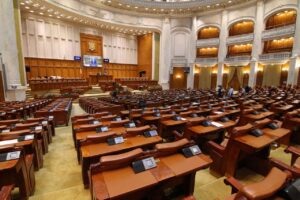
Launched in December 2023, the project brought together 13 partners from seven European countries to explore sustainable, accessible, resilient and human-centred manufacturing models, in line with the principles of the New European Bauhaus and the vision of Industry 5.0. At the heart of STARHAUS is an idea with transformative potential: bringing production closer to consumers and enabling them to participate in configuring the products they use in everyday life.
From concept to technological demonstration
One of the project’s most significant achievements is the integration of the STARHAUS mobile application with its Manufacturing Demonstration Facility (MDF).
The solution enables users to configure personalised recipes for fast-moving consumer goods through a digital application. These recipes are automatically translated into manufacturing instructions for execution by the demonstration facility.
This milestone was presented on 13 October 2026 in Nancy, France, at the LAUDS Factories Final Event – Factories in the City, by Akhilesh Kumar Srivastava (SINTEF) and Inês Francisco (INOVA).
STARHAUS explored the applicability of this model across four use cases:
- Personalised pet food;
- Fertilisers;
- Beverages;
- Breakfast cereals.
Through these use cases, the project investigated opportunities for product personalisation, efficient use of ingredients, reusable containers, waste reduction and more sustainable consumer choices.
An industry where people actively participate in innovation
Beyond technological development, STARHAUS placed particular emphasis on the social dimension of industrial innovation. Through co-design, social research, surveys, interviews and workshops, partners explored citizens’ needs, trust in new technologies, accessibility and the social acceptance of emerging manufacturing models.
This approach reflects a shift in perspective: technological development should pursue not only industrial performance and efficiency but also the ability to respond to the real needs of people and communities.
Open innovation and European collaboration
Through three Open Innovation Competitions, STARHAUS extended collaboration beyond the original consortium, involving businesses, researchers, creative practitioners and local stakeholders.
Supported initiatives explored sustainable consumption, carbon-footprint information, local biofertiliser production and community-based innovation.
Cooperation with the European sister projects LAUDS Factories, FABRIX and YouRban also strengthened dialogue on integrating manufacturing into urban settings and developing industrial ecosystems closer to citizens.
Events in Cluj-Napoca, Brussels, Nancy and other European locations facilitated knowledge exchange between academia, industry, public administration and society.
Cluj-Napoca: contributing to the European dialogue on the future of industry
The Municipality of Cluj-Napoca contributed to exploring the local and community dimensions of personalised manufacturing and the relationship between technological innovation, sustainability and urban development.
Academic exchange and dialogue with public administration were further supported by a dedicated STARHAUS panel on 1 October 2026 at the Transylvanian International Conference in Public Administration (TICPA 2026).
These activities connected research and technological innovation with discussions on public policy, skills development and the future of European industry.
Results that extend beyond the project
STARHAUS leaves a portfolio of results with potential for further development and exploitation, including:
- An adapted small-scale modular manufacturing facility developed by CODY;
- An integrated software ecosystem developed by WIZ Research;
- Modelling methods for customised products;
- Business outcomes for customised agri-food products;
- Open guidance on integrating social sciences and humanities into technology projects;
- Human-centred approaches to urban manufacturing;
- Customisation approaches supporting sustainability for communities.
The experience accumulated by the European partners is also brought together in the collective book Open Innovation across Europe. STARHAUS Pathways, which gathers interdisciplinary contributions and lessons from the project.
A European legacy for the future of manufacturing
The STARHAUS coordination team at SINTEF highlights the potential of collaboration between technology, design and communities to make everyday products more personalised, accessible and sustainable.
The conclusion of the project marks the beginning of a new phase for the exploitation of results, development of partnerships and exploration of technology transfer and applications in industrial and urban contexts.
STARHAUS contributes to a European vision of manufacturing in which technological progress, economic competitiveness, sustainability and human well-being are complementary objectives.
From the coordination team
“Over three years, STARHAUS has explored how technology, design, and communities can work together to make everyday products more personalised, accessible, and sustainable Together, the consortium has delivered a manufacturing demonstrator connected to a digital ecosystem, generated valuable knowledge on user trust and acceptance, and built a vibrant network of partners, cities, stakeholders, and open-call innovators across Europe.
We are grateful to all project partners, participants in our workshops, pilot activities and open calls, our sister projects and the European Union for their support throughout this journey. While the project formally concludes, we believe its legacy is only beginning. We look forward to seeing STARHAUS ideas, tools, and partnerships continue to inspire innovation and create impact well beyond the lifetime of the project.” – The STARHAUS coordination team, SINTEF
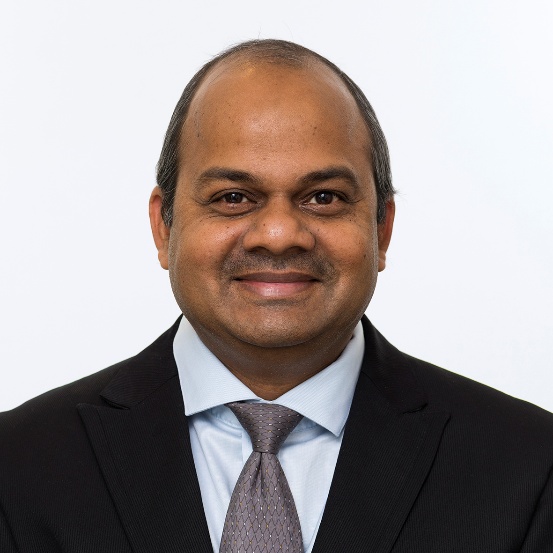
Akhilesh Kumar Srivastava
Overall Project Manager – STARHAUS
Chandana Ratnayake
Main Coordinator Contact – STARAHAUS
We thank all STARHAUS partners, local communities and collaborators for contributing their knowledge, creativity and commitment. This M36 issue remains a pre-publication draft until the final results and claims are validated by the consortium.
Warm regards,
STARHAUS Team
Website: https://starhausproject.eu/
LinkedIn: https://www.linkedin.com/company/starhausproject/
About STARHAUS
STARHAUS – Sustainable, Technological, Accessible and Resilient human-centric manufacturing supporting the New European Bauhaus through synergies between customized production and consumption models – is a European research and innovation project funded under Horizon Europe, grant agreement No. 101136027.
Website: https://starhausproject.eu/
LinkedIn: https://www.linkedin.com/company/starhausproject/
This project has received funding from the European Union’s Horizon Europe research and innovation programme under grant agreement No. 101136027. The content is the sole responsibility of the authors and does not necessarily reflect the views of the European Union.
For more information about the STARHAUS project and future meetings, please visit
LinkedIn: https://www.linkedin.com/company/starhausproject,
Website: https://starhausproject.eu/.
For further information, media inquiries or interviews, please contact: Raluca Antonie, Communication Manager
Phone: 0040-749-060690
Email: raluca.antonie@fspac.ro
About the New European Bauhaus
An interdisciplinary initiative of the European Union, the New European Bauhaus blends aesthetics with technology, sustainability and inclusivity, aiming to create a better future.
Building Trust, Driving Change, and Accelerating Acceptance of Decentralized Manufacturing Models
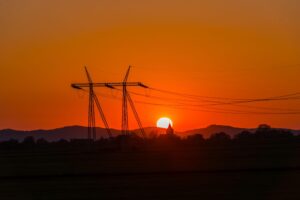
Energia furată ne afectează pe toți.
O campanie Politic Live despre prevenirea furtului de electricitate și siguranța comunităților.
Pe baza comunicărilor DEER
Citeste si:

Salina Turda
Planifică vizitaȘtiri și comunicate
-
 Salina Turda pregătește amenajarea Minei Iosif și modernizarea bazei de tratament
-
Galerie nouă la Salina Turda: Mina Iosif a fost conectată cu Mina Terezia
-
Anunț de angajare Salina Turda SA | Vânzător-casier, un post
-
Salina Turda, tărâmul magic din adâncul Transilvaniei. Spectacolul ascuns la sute de metri sub pământ
-
 SALINA TURDA, ÎN PERICOL! PREFECTUL JUDEȚULUI CLUJ CERE DE URGENȚĂ 30 MILIOANE DE LEI PENTRU SALVAREA UNEI COMORI NAȚIONALE